Support Starts at the Bench: Know the Parts, Know the People
A behind-the-scenes look at how hands-on familiarity with parts turns into clear, human support for Prestige chamber owners.
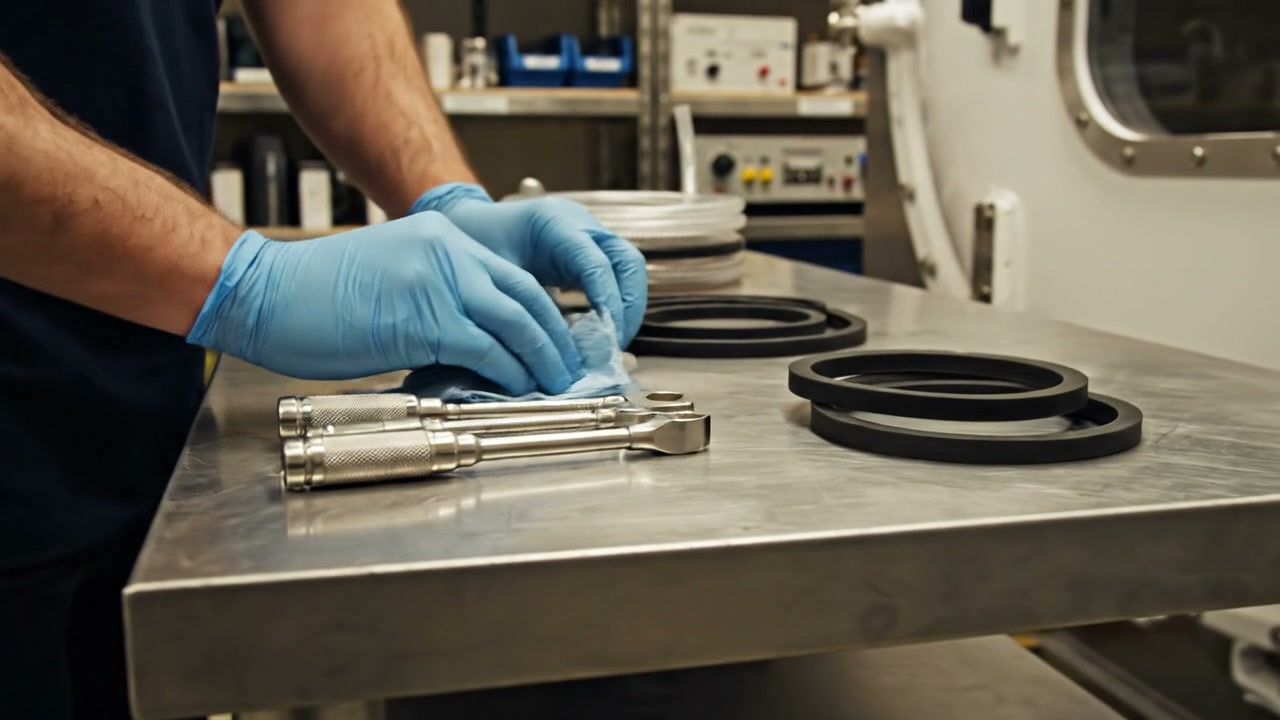
AI-generated illustrative workshop footage created for this feature; not a customer installation or a recording of a specific technician.
The showroom reveal gets the applause. But there is another moment we love: a small component on the workbench, a technician turning it over, and the thoughtful pause that comes before explaining what it does in plain English. It is not a dramatic product reveal. It is how knowledge becomes tangible, one part and one useful explanation at a time.
Support is often pictured as a phone number or a service visit. For an owner, it is something more personal: an answer anchored in someone who knows the equipment. For the people providing that support, familiarity starts before a question arrives. It grows by learning what components are called, where they belong, and how they relate to the way an owner’s system is set up. Today, we’re stepping behind the bench to that quieter part of ownership.
Learn the part before the question arrives
Every component has a practical story: what it is for, how to recognize it, which details matter when discussing it, and where it fits into the bigger picture. Becoming familiar with those details gives a technician a steadier starting point when an owner has a question. The answer can begin with the part itself, then move to the customer’s setup and the clearest next step.
That is a very human kind of technical knowledge. It does not ask an owner to learn a new language before getting help. It makes space for a simple conversation: name the part, explain its role, ask what the owner is seeing, and make sure the answer fits the actual situation. The goal is not to sound clever. The goal is for the person on the other end to feel oriented.
Parts on hand are only the beginning
Keeping useful parts on hand is an important piece of being ready to support equipment over time. But a shelf alone is not the whole story. A well-organized work area helps a team find the right component, recognize it, and talk about it clearly. Labels, trays, reference notes, and practical instructions all help turn a collection of parts into useful knowledge.
We think about readiness as a combination: the part, the context, and the person who can explain both. That perspective shapes how we prepare for conversations with owners and operators. It also keeps us grounded in the everyday reality of equipment ownership: each system has a room, a routine, and people who want their questions answered in a straightforward way.
Good questions make room for good improvements
Sometimes an observation begins with a technician comparing a component with the instructions beside it. Could a note be clearer? Could a useful detail be easier to see? Could a small fixture make a repeated task easier to explain? These are modest questions, but they are the kind that help make practical work more consistent.
We like improvements that have a job to do. When our engineers design an adjustment, the point is not to decorate a spec sheet; it is to make the equipment easier to understand, support, or use as intended. Keeping that work close to the people who handle and install the equipment helps our ideas stay connected to real owner questions. It is thoughtful engineering with a human purpose.
Make the explanation part of the handoff
Good training is not a pile of terms delivered at top speed. It is a clear walk-through, a chance to see how the pieces fit together, and room to ask a question in your own words. A team that knows its parts can make those conversations more specific and more comfortable, whether the topic is a routine setup question or a detail someone wants to understand before opening day.
That matters for wellness centers and home programs alike. A useful conversation takes the owner’s room, operating plan, and experience into account instead of reaching for a one-size-fits-all answer. Our technicians and engineers care about reliable function, safety-minded operation, and training that leaves people feeling prepared.
The quiet craft behind lasting support
There is a quiet satisfaction in the small signs of care: a part returned to its place, a clear note beside a reference, a technician who can describe a component without making it sound mysterious. None of those moments needs a spotlight. Together, they make a workshop feel like a place where the people behind the equipment take its ownership seriously.
We design our own improvements, keep parts on hand, and stay close to the questions that come with real-world use. That is how a workshop habit connects to a better support experience: familiar faces, plain-English guidance, and thoughtful help from people who know the equipment.
Buy from Prestige, get supported by Prestige forever—the same team who built it and installed it. If you are planning a chamber for a wellness center or home program, talk with the Prestige team about your room, your workflow, and the training and support you want around the equipment.