The Sleep Signal in HBOT Research: What a 395-Person Study Actually Found
A 2026 Frontiers in Neurology study found better self-reported sleep scores after a 60-session HBOT protocol. Here is the useful signal—and the honest caveat.
A quiet chamber-room vignette for today’s research conversation. Documentary-style, with no text overlays.
Sleep is one of those wellness questions that deserves curiosity without the circus. A new paper in Frontiers in Neurology looked at whether hyperbaric oxygen therapy was associated with changes in sleep quality across three different groups. The headline is encouraging. The fine print is important. Both can be true at the same time.
The study followed 395 adults who completed a 60-session HBOT protocol: 180 people in a healthy-aging group, 92 with long COVID, and 123 with PTSD. Researchers measured sleep with the Pittsburgh Sleep Quality Index, a self-reported questionnaire that asks about several parts of the sleep experience. The paper was published March 30, 2026, and examined records collected between January 2017 and January 2025.
What the researchers actually did
Participants completed five sessions each week for 12 weeks. Each session lasted 90 minutes at 2.0 ATA with 100% oxygen, periodic air breaks, and supervision by certified medical staff in a multiplace chamber. That is a structured, consistent protocol—not a one-off visit and not a casual “try it and see” setup.
The researchers compared each participant’s sleep score before and after the series. Because this was a retrospective observational study, the team was looking at change over time in people who completed the program. It was not a randomized trial with a separate control group.
The useful signal: sleep scores moved in every group
Global PSQI scores improved significantly in all three groups. The reported effect sizes ranged from 0.37 to 0.91. Across the full sample, the average score moved from 9.0 before the protocol to 8.2 afterward. The healthy-aging group moved from 7.1 to 6.5, the long-COVID group from 8.4 to 7.7, and the PTSD group from 12.1 to 10.9.
The changes were not identical across every part of the questionnaire. Participants reported improvements in sleep disturbances, subjective sleep quality, sleep latency, and daytime dysfunction. The study did not find significant changes in sleep efficiency or sleep-medication use. That kind of uneven result is worth keeping: it gives the conversation more shape than a blanket “everything got better.”
The honest caveat: association is not causation
This paper does not prove that HBOT caused the sleep improvements. There was no control group, the data came from people who completed the full program, and the outcome was self-reported. The researchers also did not use objective sleep measurements. Selection effects, expectancy, regression toward the average, medication factors, and the structure of receiving regular care could all be part of the picture.
So the brass-tacks takeaway is not “HBOT fixes sleep.” It is: this is an interesting signal across a sizeable cohort, and it deserves better-designed prospective research. That is how useful wellness conversations stay useful—positive about what the data suggests, disciplined about what it cannot say yet.
Prestige’s POV: the protocol is part of the product
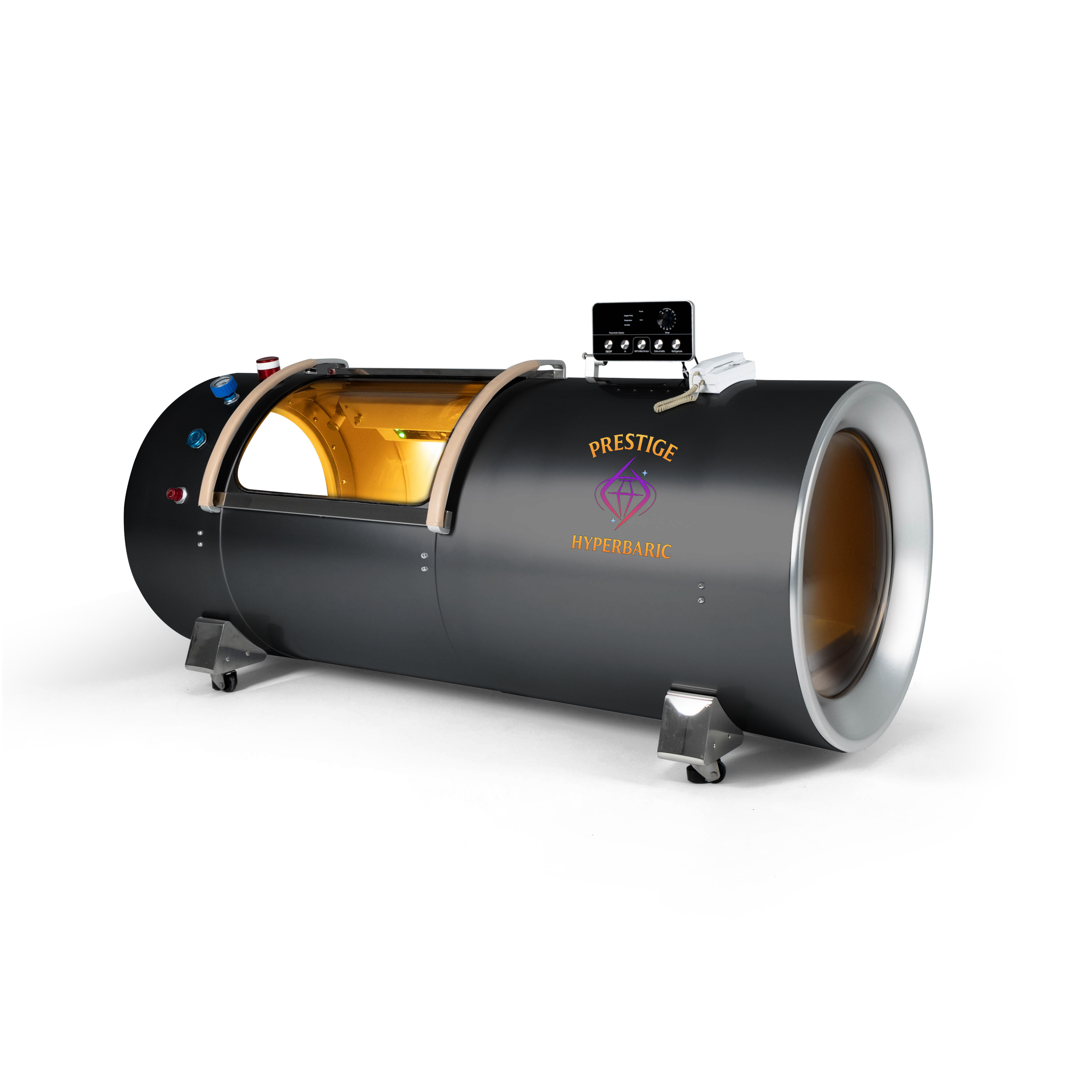
For chamber owners, the study is also a reminder that a program is more than the vessel in the room. The schedule, operator orientation, room flow, customer expectations, oxygen planning, cleaning habits, and follow-up all shape the experience. A thoughtful setup makes consistency easier, and consistency gives any future research or internal program review a cleaner foundation.
We think premium should feel calm and practical. Prestige designs its own improvements, keeps useful parts close, and supports owners with the same team that knows the equipment from delivery through installation and beyond. Buy from Prestige, get supported by Prestige forever, by the same team who built it and installed it.
A little real-world confirmation
That support-first approach is what customers notice, too. In a recent review, Katie F. wrote that the Prestige team goes “above and beyond” with questions, troubleshooting, and making sure everything runs smoothly. No single review proves a research point, of course. It does show the kind of human follow-through that helps a wellness program feel steady enough to operate consistently.
If you are considering a chamber for a home wellness plan or a professional program, start with the room, the workflow, and the people who will support it. Book a showroom visit or talk with the Prestige team about fit, orientation, installation planning, and long-term service.
Sources
- Frontiers in Neurology: The effect of hyperbaric oxygen therapy on sleep quality across diverse patient populations.
- PubMed record for the study.
Educational commentary only. This article is not medical advice and does not establish treatment efficacy.